Sea Kayaking
The Island Stayed Across the Water
We could see the beach for most of the crossing. Seeing where you want to go, it turns out, is not the same as having the conditions to reach it.
01
A window in the forecast
The channel was only eight kilometres wide, close enough that the island cliffs looked detailed from our beach. The forecast offered a calm morning before stronger wind arrived from the west. We marked bearings, checked the tide, clipped the tow lines where we could reach them, and agreed on a turnaround time. The plan felt conservative while we stood on land.
We launched into water smooth enough to reflect the cloud. For the first hour, the crossing was almost meditative: paddle enter, rotate, recover, breathe. The mainland slowly lost its roads and houses. Ahead, the island seemed not to move at all. Open-water distance does that. It removes the comforting evidence of progress.
02
The wind arrived early
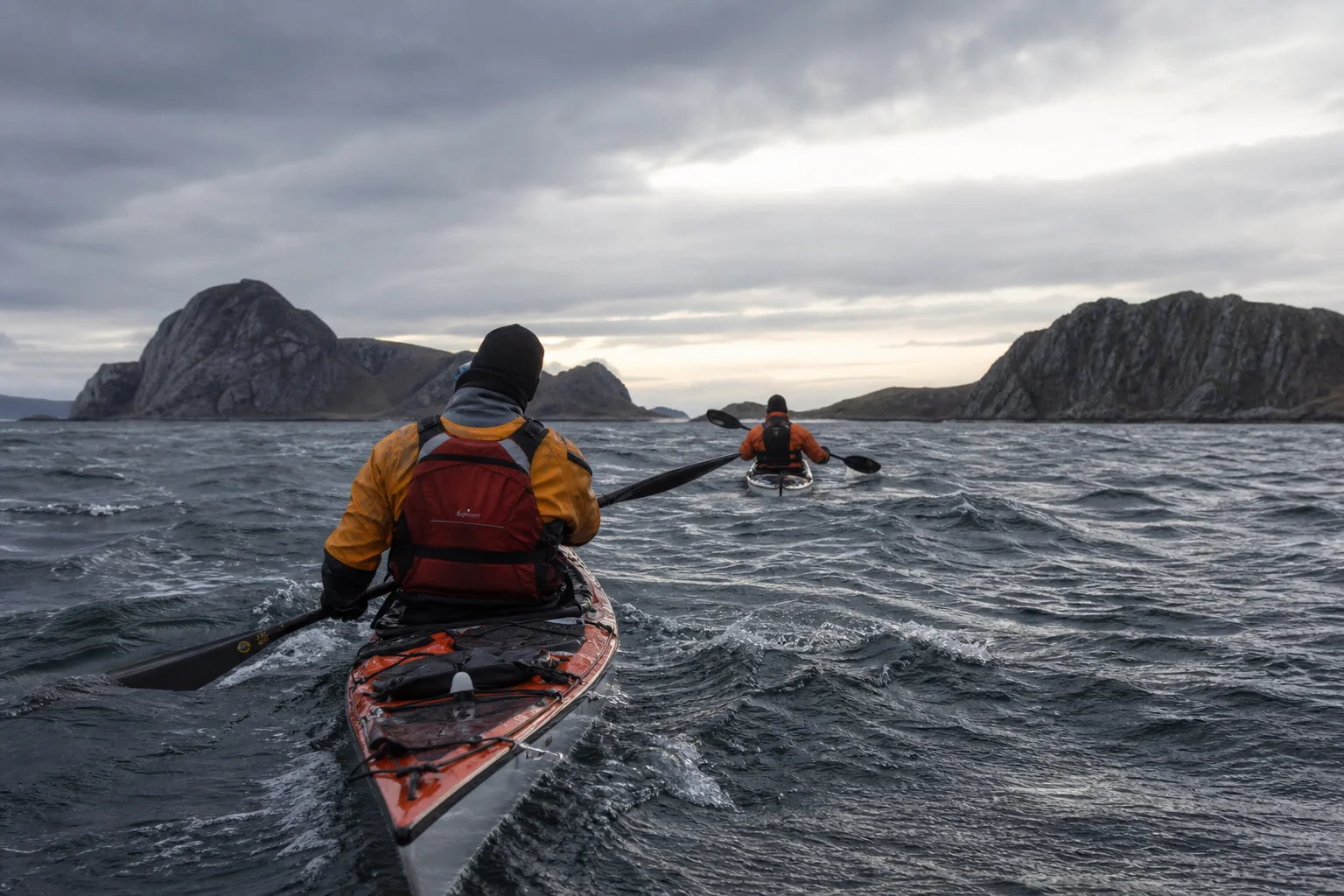
The first gust darkened a strip of water in front of us. Ten minutes later, small whitecaps were striking the kayaks from the side. We adjusted our angle and kept the group close enough to speak without shouting. Each correction cost energy, and each pause allowed us to drift north of the line we had chosen.
The beach was still visible. That made the decision harder. It looked reachable because the eye does not calculate cold water, fatigue, or what another two hours of rising wind might do. At our agreed time, we rafted the boats together. Nobody wanted to say it first. Then Luka looked at the mainland, looked at the wave tops, and said, 'We go back while going back is still easy.'
“Turning back did not erase the crossing. It was the first good decision we made on it.”
03
The direction nobody photographs
Turning the kayaks around brought immediate relief and a sharp kind of disappointment. The wind that had fought us now pushed from behind, but following seas demanded attention of their own. We surfed short waves, corrected before the stern swung, and checked one another after every larger set.
Back on the same beach, we carried the boats above the tide line in silence. The island remained across the water, unchanged and unapologetic. That evening we cooked beside the tents and listened to wind bend the grass. The story felt unfinished only because I had mistaken arrival for the only ending worth having.
04
A second morning
The wind dropped overnight. At dawn, we repeated every check and launched again. This time the calm held. We crossed on the same bearing, passed the place where we had turned around, and kept paddling until individual stones appeared on the far beach. There was no cheering when the hulls touched gravel. We were too aware of how conditional the arrival had been.
The island was beautiful, but beauty was not the lesson I carried home. The important moment happened the day before, halfway across, when four people chose to disappoint themselves instead of asking the sea to respect their ambition. Adventure is not proved by forcing the original plan. Sometimes it is proved by returning with enough humility to try again tomorrow.