Climbing
The Wall Above the Valley
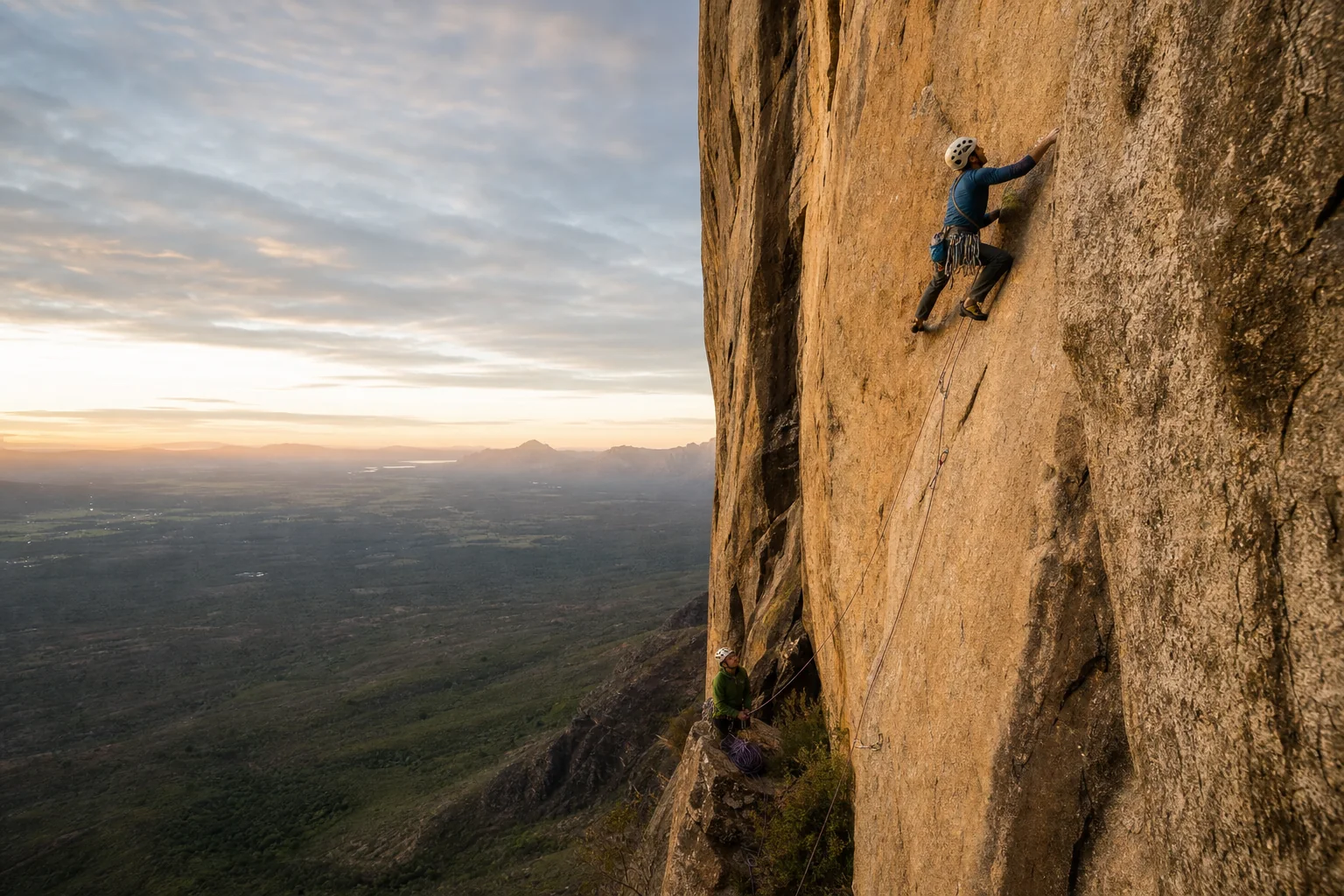
Halfway up the second pitch, the holds became smaller, the valley became enormous, and every rushed movement stopped working.
01
Learning the system
Before the climb, we spent an hour on flat ground. Tie in. Partner check. Commands. Belay changeover. What to do if wind swallowed a call. Multi-pitch climbing turns trust into a sequence of knots, carabiners, and habits that can be inspected.
My partner led the first pitch while I watched the rope move through each piece of protection. When it came tight, I climbed. The first metres felt familiar. Then the ground fell away and familiar movement acquired consequence.
02
The difficult metre
On the second pitch, one section offered no obvious hold. I tried to pull harder and slipped back onto the rope. Nothing dramatic happened. The protection held. My partner told me to breathe and look at my feet.
A shallow edge appeared where I had been staring past it. I placed the outside of the shoe, shifted my hips, and stood up instead of hauling. The move was not powerful. It was precise. That single metre took ten minutes and taught more than the easy hundred below it.
“The wall did not reward confidence. It rewarded attention.”
03
At the stance
The belay ledge was barely wide enough for both shoes, yet it felt like a room. We clipped in, checked the anchor, coiled the rope, and shared water while the valley spread beneath us. Birds crossed below our feet.
Exposure is often described as fear of height. For me it was awareness of everything at once: the rope, the next piece, the wind, my partner’s hands, the distance below. It made distraction impossible. Presence was not a wellness exercise. It was the job.
04
Back on the ground
We descended before afternoon weather arrived. At the base, the wall looked smaller than it had from the middle and larger than it had in the morning. We packed every piece, counted the carabiners, and found one crushed sandwich at the bottom of the bag.
Climbing did not make me feel invincible. It did the opposite, and that was useful. The route made consequence visible, then provided a disciplined way to move through it. Confidence came afterwards, quieter and more accurate than the kind I brought to the wall.