Diving
When the Surface Disappeared
At thirty metres the current strengthened, the boat became an idea somewhere above us, and breathing was the only useful thing left to do.
01
Negative entry
The briefing had been unusually direct. Roll in together. Do not wait at the surface. Deflate, descend immediately, meet behind the reef at twelve metres. The current was running hard enough that hesitation would separate the group before the dive began. We checked air, releases, computers, and one another’s eyes.
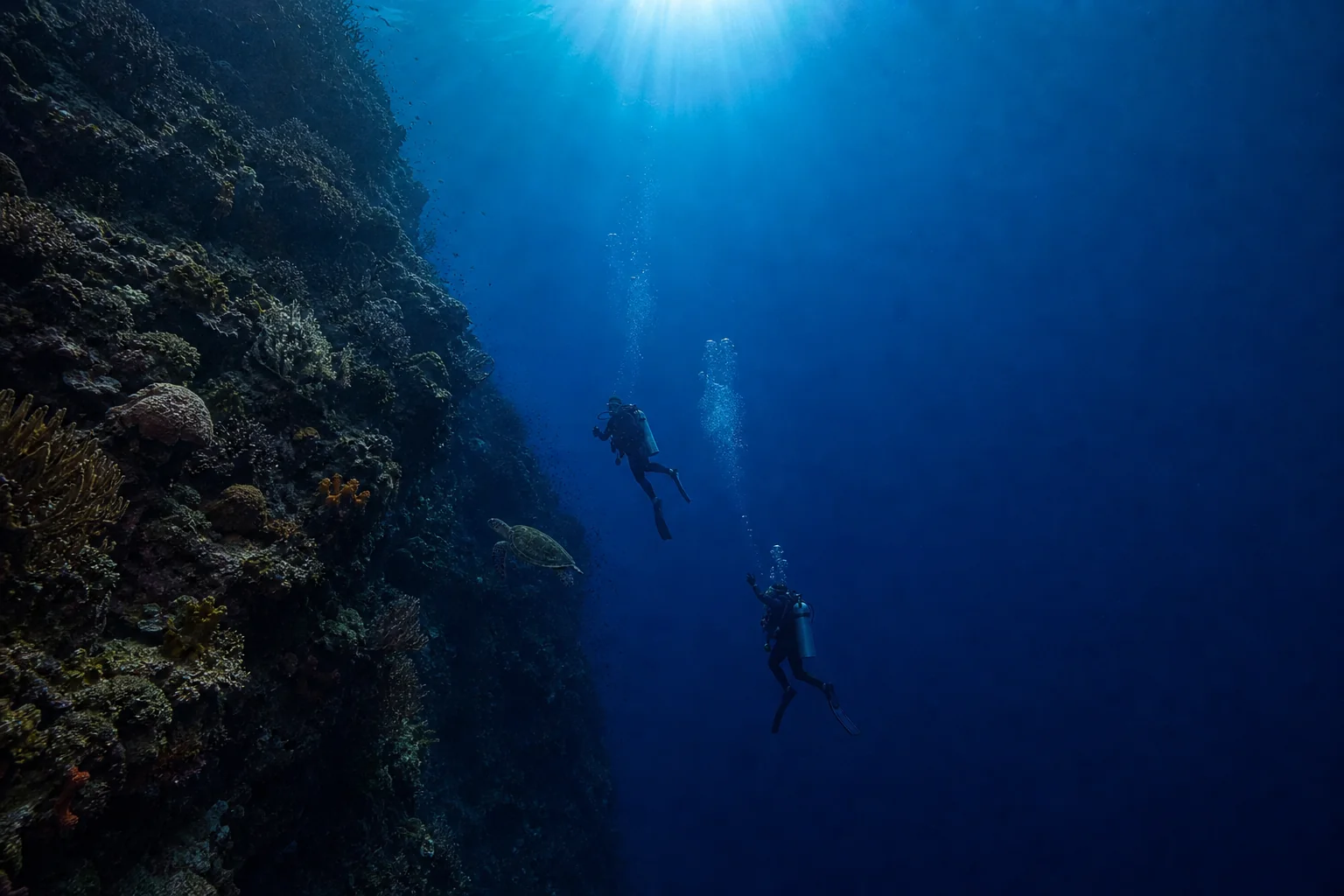
On the count, the sea took the weight away. Bubbles rushed past my mask as I emptied the wing and dropped through blue water. For a few seconds there was no reef, no bottom, and no sense of speed—only the shrinking silver surface above. Then the wall appeared beside us, covered in coral and dropping beyond sight.
02
A different kind of scale
On land, distance is easy to understand. Underwater, a wall can be close enough to touch while the space below it feels endless. We levelled at thirty metres and let the current carry us along. A turtle moved against it with insulting ease. Schools of fish folded around the reef like fabric in wind.
My breathing became too fast. Nothing was wrong, which made the feeling harder to argue with. I checked the gauge, found my buddy, placed two fingers against the rock without gripping it, and lengthened each exhale. The panic did not vanish. It became a smaller fact among many other facts: good gas, clear mask, guide ahead, buddy beside me, reef on the left.
“The deep is quiet enough to show you exactly how calm you are not.”
03
The turn
At the agreed pressure, we moved shallower. This is where the dive became beautiful rather than intimidating. Sunlight returned colour to the reef. Orange fans, purple soft coral, tiny blue fish holding position in the flow. We sent the marker buoy up and began the safety stop in open water.
Three minutes can feel long when there is no fixed object beside you. We watched our depth, held the line loosely, and drifted together. The boat found the orange marker and arrived as if summoned. At the surface everyone spoke at once. Underwater we had communicated all we needed with a few signs and the discipline to follow the plan.
04
What came back up
That dive did not make me fearless. It made fear more specific. I learned the difference between a sensation and an emergency, and the value of procedures practiced before adrenaline arrives. Calm is not a personality trait. Often it is a checklist remembered at the right moment.
For the rest of the trip, every descent felt different. I still looked up as the surface blurred away. I still felt the first quick beat in my chest. Then I checked my buddy, cleared my ears, and continued downward—not because the ocean had become smaller, but because I had learned how to enter it properly.